Kitchen Skills
How to Keep Fresh Herbs Fresh for Longer
Learn how to store tender and hardy fresh herbs so they stay crisp and vibrant longer, plus simple ways to revive limp herbs and use up the extras.
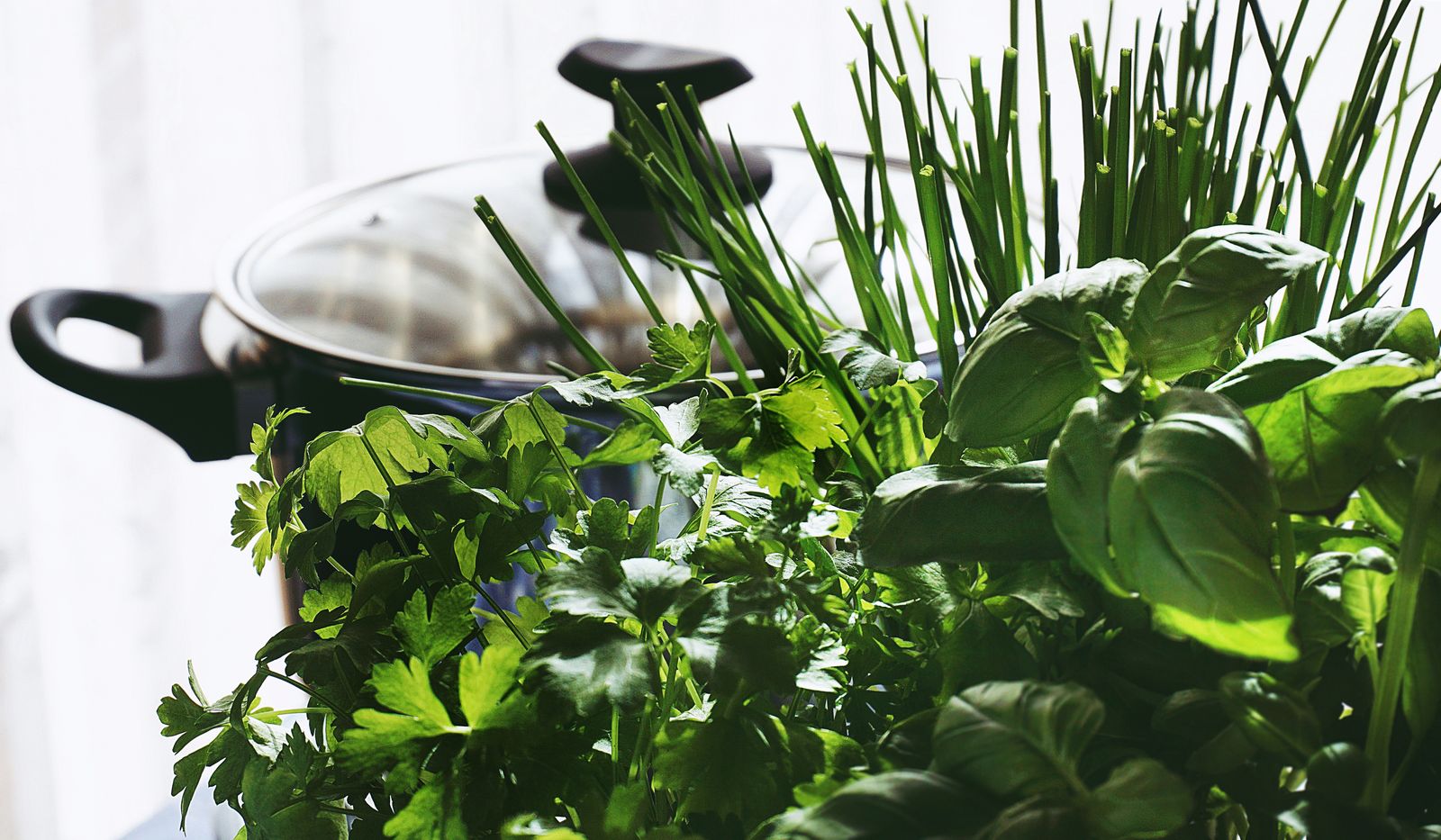
Tender herbs and hardy herbs need different care
Herbs fall into two loose groups. Tender herbs have soft stems and delicate leaves: parsley, cilantro, basil, dill, mint, chives, and tarragon. Hardy herbs have woody stems and sturdier leaves: rosemary, thyme, sage, oregano, and bay.
Tender herbs mostly fail by drying out or bruising. Hardy herbs mostly fail by getting too damp and turning dark or moldy. Once you know which group an herb belongs to, the storage method is easy to choose.
Store tender herbs like a bouquet
Trim the ends of parsley, cilantro, dill, or mint and stand the bunch in a jar with an inch or two of water, the way you would with cut flowers. Loosely cover the leaves with a plastic bag and keep the jar in the refrigerator.
Change the water every couple of days, and pull out any yellow or slimy stems as you see them. Treated this way, a bunch of parsley or cilantro often stays usable for a week or more, sometimes noticeably longer.
Keep basil out of the cold
Basil is the exception among tender herbs. Cold refrigerator air can darken its leaves within a day or two. Store basil in a jar of water on the counter, away from direct sun, with a loose bag over the top if your kitchen is dry.
Use it within several days. If it starts to droop, it is a good time to make pesto or tear it into a pan of tomatoes.
Wrap hardy herbs in a barely damp towel
Rosemary, thyme, sage, and oregano keep well when rolled loosely in a slightly damp paper towel or cloth and placed in a container or bag in the refrigerator. The towel should feel just damp, not wet.
Check them every few days. If the towel has dried out, mist it lightly. If the leaves look dark or wet, swap in a fresh, drier towel. Hardy herbs stored this way often last a couple of weeks.
Wash herbs right before using
Water left on leaves encourages spoilage, so it is usually better to rinse herbs just before you use them. If you prefer to wash them when you get home, dry them very thoroughly in a salad spinner or between towels before storing.
Sandy herbs like cilantro and dill can be swished in a bowl of cold water, lifted out, and spun dry so the grit stays behind in the bowl.
Revive herbs that have gone limp
Slightly wilted tender herbs can often be perked up. Trim the stems and soak the bunch in a bowl of ice water for fifteen to thirty minutes, then dry well. This works for droopiness from dehydration, not for herbs that are slimy or discolored, which should be thrown away.
Freeze extras for cooking
Frozen herbs lose their crisp texture but keep much of their flavor, which makes them useful in soups, sauces, and braises. Chop the herbs, pack them into an ice cube tray, and cover with olive oil or a little water. Once frozen, pop the cubes into a labeled bag.
Hardy herbs like thyme and rosemary can also be frozen whole on the stem, then crumbled straight into the pot.
Use the stems and the last handfuls
Parsley and cilantro stems have plenty of flavor. Chop them finely into salsas, rice, and stir-fries, or add them to stock. The last handful of mixed tender herbs can be blended with oil, garlic, lemon, and salt into a quick green sauce for eggs, grilled vegetables, or chicken.
Buying only what you will use helps too. If a recipe calls for a tablespoon of rosemary, a small pot of the living herb on a sunny windowsill may be cheaper over time than repeated bunches.
More from the blog
Cooking Basics
Why Sheet Pan Dinners Get Soggy (and How to Make Them Crispy)
A sheet pan dinner should come out browned at the edges, not pale and wet. Most of the time the problem is space, moisture, or timing, and all three are easy to fix.
Everyday Technique
How to Make a Quick Pan Sauce in the Same Skillet
The browned bits left in a skillet after searing chicken, pork, or steak are the start of a sauce. With a little liquid and a few minutes, they become something worth pouring over dinner.