Everyday Technique
How to Make a Quick Pan Sauce in the Same Skillet
Learn how to make a quick pan sauce: deglaze the browned bits, reduce the liquid, finish with cold butter, and turn a simple skillet dinner into more.
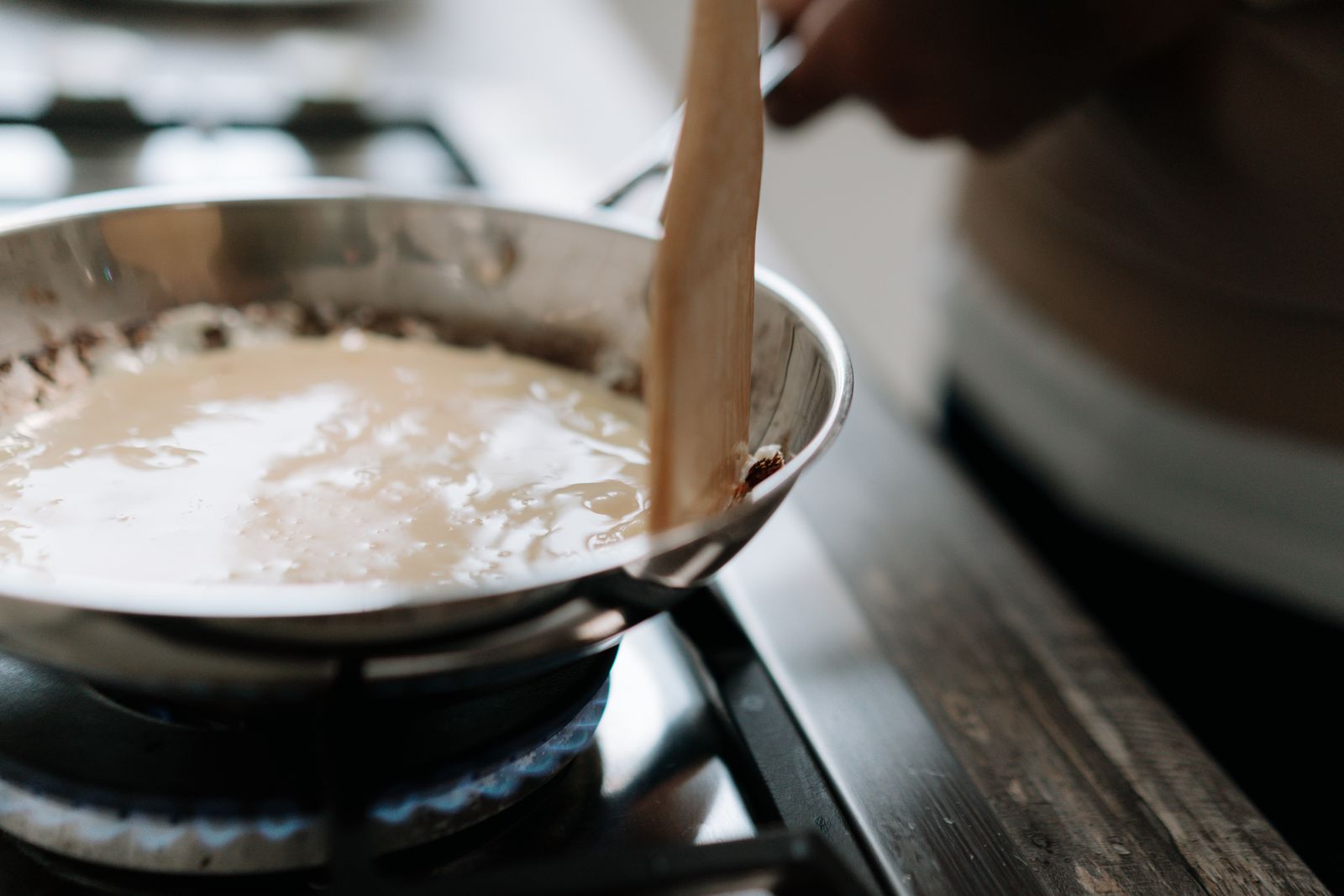
Start with the browned bits
When meat sears in a skillet, some of its juices stick to the pan and brown. Those bits, often called fond, carry a lot of savory flavor. A pan sauce simply dissolves them into liquid and turns them into something you can spoon over the meat.
Stainless steel and cast iron build fond better than nonstick pans, which are designed to stop food from sticking. You can still make a sauce in nonstick, but it will usually taste milder.
Watch the heat while searing. Deep brown fond tastes rich; black, burnt fond tastes bitter and will ruin the sauce. If the bottom of the pan is scorched, it is better to wipe it out and start the sauce fresh.
Rest the meat and keep the pan
Move the cooked meat to a plate and let it rest while you make the sauce. The few minutes it takes are about the same time the meat needs to settle, so nothing waits on anything else.
Pour off most of the fat if there is a lot, leaving roughly a tablespoon behind. Keep any juices that collect on the resting plate; they go back into the sauce at the end.
Soften an aromatic
Lower the heat to medium and add a small amount of minced shallot, onion, or garlic. Stir for thirty seconds to a minute, just until it softens and smells fragrant. Garlic burns quickly in a hot pan, so add it last or keep it moving.
This step is optional, but it gives the sauce more depth than liquid alone.
Deglaze and scrape
Pour in about half a cup to a cup of liquid. Chicken or beef broth works for almost anything. Dry white wine suits chicken and pork, red wine suits steak, and apple cider is lovely with pork chops. The liquid will bubble hard at first; that is normal.
Use a wooden spoon or flat spatula to scrape the bottom of the pan while the liquid simmers. The fond loosens and dissolves, coloring the liquid. This scraping is what makes it a pan sauce rather than plain broth.
Reduce until it coats a spoon
Let the liquid simmer until it has reduced by roughly half and looks slightly syrupy. Depending on the pan and heat, this usually takes three to five minutes. Reducing concentrates flavor and gives the sauce some body.
Because the liquid concentrates, hold off on adding much salt until the end. Broth in particular can become salty as it reduces.
Finish with cold butter off the heat
Take the pan off the heat and swirl in a tablespoon or two of cold butter, a piece at a time. As it melts gradually, it thickens the sauce slightly and makes it glossy. If the pan is too hot, the butter separates and turns greasy instead of creamy.
For a richer sauce, a splash of cream or a spoonful of Dijon mustard can go in before the butter. For a dairy-free version, finish with a little olive oil and skip the butter.
Balance and serve
Taste the sauce. Add salt and pepper as needed, then a small squeeze of lemon or a few drops of vinegar if it tastes heavy. Fresh parsley, thyme, or chives stirred in at the end add color and freshness.
Pour in the resting juices, then spoon the sauce over the meat right away. A pan sauce is small on purpose; a few spoonfuls per serving is plenty.
A few combinations to try
Chicken with white wine, lemon, butter, and capers. Pork chops with apple cider, Dijon, and thyme. Steak with red wine, shallot, and butter. Salmon with white wine, dill, and a spoonful of cream.
Once you have made a pan sauce a few times, you will not need a recipe. The steps stay the same, and only the liquid and finishing flavors change.
More from the blog
Cooking Basics
Why Sheet Pan Dinners Get Soggy (and How to Make Them Crispy)
A sheet pan dinner should come out browned at the edges, not pale and wet. Most of the time the problem is space, moisture, or timing, and all three are easy to fix.
Kitchen Skills
How to Keep Fresh Herbs Fresh for Longer
Fresh herbs often wilt before the bunch is half used. Storing tender and hardy herbs differently keeps them usable far longer, and the leftovers can still become something good.