Everyday Kitchen
How to Plan a Week of Dinners Without Wasting Food
A practical method for planning five dinners around the food you already have, using perishable ingredients first, overlapping ingredients thoughtfully, and building flexibility into the week.
Start with the food that is already in the kitchen
A useful meal plan starts with an inventory, not a list of recipes. Before deciding what to cook, look through the refrigerator, freezer, and pantry and write down the ingredients that are already available. The most important items are the ones with a short life: opened dairy, fresh herbs, salad greens, berries, ripe produce, cooked grains, thawed meat, and leftovers from the previous few days.
This changes the question from what sounds good this week to what can be made with what is already here and what small gaps actually need to be filled. That usually produces a shorter grocery list and a plan that is more connected to the food that would otherwise be forgotten.
You do not need a complete household inventory. Five quiet minutes is usually enough. Look for the ingredients that are easy to overlook, especially partial containers, half-used produce, open packages, and cooked food. Those are the ingredients most likely to become waste if they are not assigned a purpose.
Sort ingredients into use-first, use-soon, and stable
A simple three-part sort makes the rest of the week easier. Put very perishable foods in a use-first group, foods that should comfortably last several days in a use-soon group, and pantry or freezer staples in a stable group. The exact shelf life depends on the ingredient and how it has been stored, so use packaging dates, storage guidance, and food-safety judgment when deciding what belongs where.
The point of the categories is not to create a perfect inventory system. It is to make the order of meals obvious. Tender greens, cut fruit, ripe avocados, opened cream, and cooked leftovers usually deserve attention before carrots, cabbage, hard cheese, dried pasta, canned beans, rice, and frozen vegetables.
This also helps separate urgency from convenience. A bag of frozen peas may be easy to use, but it does not need to be used before a bunch of spinach that is already wilting. Planning around urgency first is one of the simplest ways to reduce avoidable food waste.
Choose the first two meals around the most perishable ingredients
Use the first two dinners to solve the ingredients most likely to be wasted. If there is spinach, mushrooms, half a container of cream, and cooked chicken in the refrigerator, one early meal could be a creamy chicken-and-spinach pasta. If tomatoes, cucumbers, herbs, and feta need attention, another could be a grain bowl or chopped salad with a simple protein.
The recipe does not need to use every leftover ingredient. It only needs to remove the most urgent items from the refrigerator before they become a problem. Once those first two dinners are set, the rest of the week becomes much easier to build.
It also helps to choose meals that tolerate small adjustments. A skillet dinner, pasta, soup, grain bowl, omelet, or sheet-pan meal can usually handle an extra handful of vegetables or a smaller-than-expected amount of protein without becoming a completely different recipe.
Build the middle of the week from durable ingredients
Meals three and four can rely more heavily on vegetables with a longer storage life, freezer ingredients, canned foods, grains, pasta, or other dependable basics. This is a good place for soup, sheet-pan meals, baked pasta, rice bowls, tacos, curry, or a simple skillet dinner.
Durable meals give the plan flexibility. If Tuesday becomes unexpectedly busy, a Wednesday dinner based mostly on pantry and freezer ingredients can easily trade places with it. A meal plan should reduce decisions, not become another schedule that breaks the moment the week changes.
The middle of the week is also where over-planning tends to show up. Avoid assigning three dinners that all require fresh herbs, delicate greens, and separate specialty ingredients. A few sturdy meals create breathing room and make it less likely that one changed evening ruins the rest of the plan.
Leave the fifth dinner deliberately flexible
The fifth meal does not need to be fully decided on the first day. By the end of the week, there may be a handful of vegetables left, an extra portion of cooked chicken, half a jar of sauce, cooked rice, tortillas, or several small amounts of ingredients that do not justify separate recipes.
A flexible dinner can absorb those pieces. Fried rice, soup, pasta, quesadillas, frittata, grain bowls, baked potatoes, and simple sandwiches are useful because they can change according to what is left. The purpose is not to turn every leftover into a complicated new dish; it is to give useful food one more realistic chance to be eaten.
This fifth meal is especially valuable because actual weeks rarely unfold exactly as planned. Maybe one dinner produced more leftovers than expected, someone ate elsewhere, or a schedule changed. A flexible final meal absorbs those changes instead of turning them into waste.
Overlap ingredients without repeating entire meals
Ingredient overlap saves money and reduces half-used packages, but too much overlap can make the week feel repetitive. The easiest way to avoid that is to repeat ingredients while changing the format. Roast a tray of vegetables for one dinner, then use the remaining vegetables in a grain bowl or pasta later. Cook chicken once, serve it with potatoes the first night, and use a smaller amount in soup or tacos later.
The same principle works with herbs, cheese, sauces, grains, and bread. A bunch of cilantro can flavor tacos one night and a rice bowl another. A loaf of bread can be served with soup, used for sandwiches, and turned into croutons if it begins to dry out. Repeating the ingredient is efficient; repeating the exact meal is optional.
When choosing overlap, pay attention to package size. If a recipe calls for two tablespoons of an ingredient sold in a large container, decide before buying whether the rest has another purpose. A second use does not have to be elaborate. Yogurt can become a sauce, herbs can finish eggs, broth can become soup, and shredded cheese can go into quesadillas.
Use meal formulas when you do not need another recipe
Not every dinner needs a new recipe. A few dependable formulas are often more useful: protein plus vegetable plus starch; pasta plus vegetable plus sauce; grain plus protein plus crunchy vegetable plus dressing; soup plus bread; eggs plus vegetables plus toast. These structures leave room for whatever is already available.
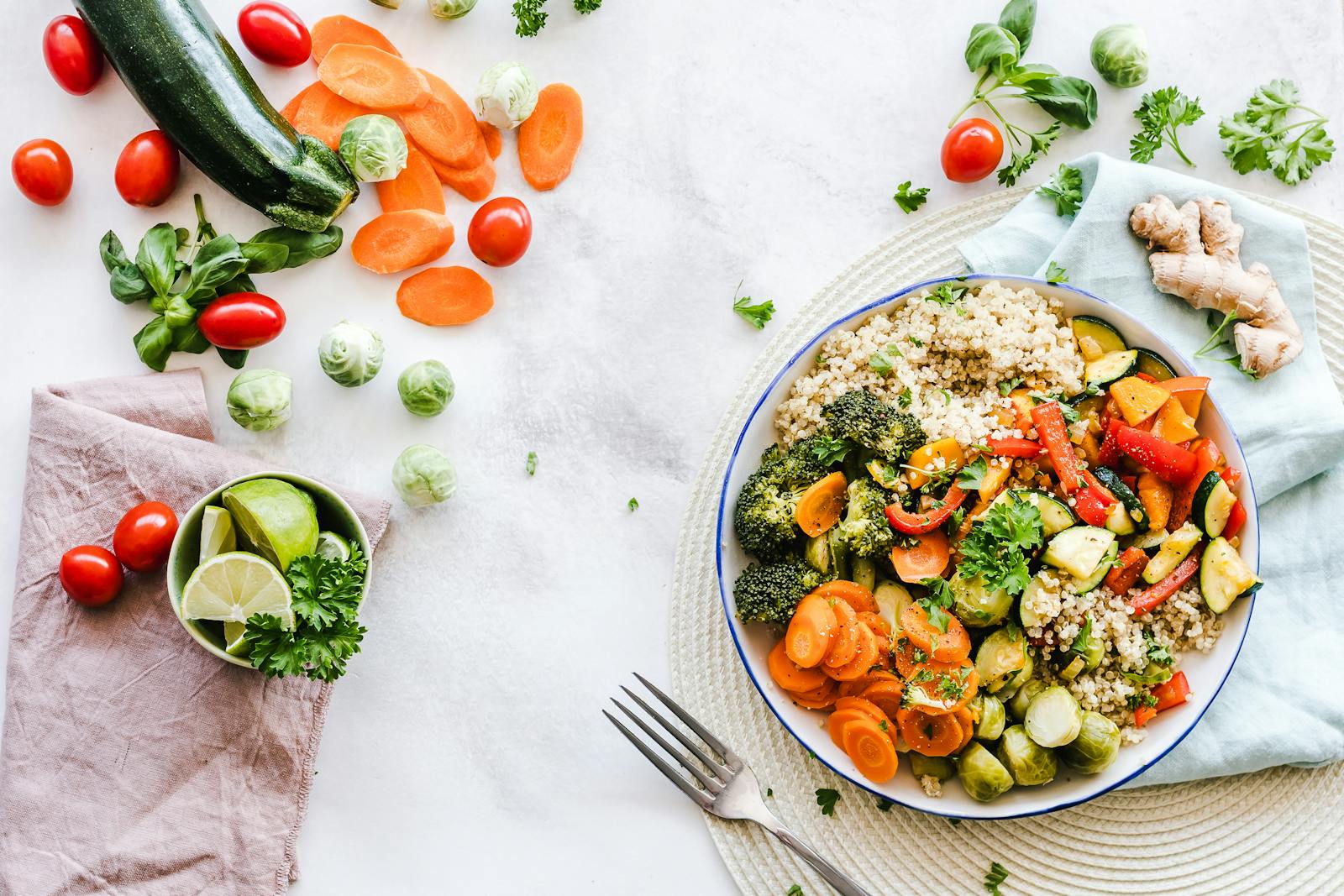
For example, a grain bowl can start with rice, quinoa, or another cooked grain. Add roasted or raw vegetables, beans or leftover meat, something acidic such as a simple vinaigrette, and a small finishing ingredient such as herbs, seeds, or cheese if it is already on hand. The formula provides structure without requiring a special shopping trip.
Meal formulas are also useful for small amounts of leftovers. Two ounces of chicken may not feel like enough for a full chicken dinner, but it can be plenty when combined with rice, vegetables, beans, and dressing. Thinking in components helps ingredients stretch farther without making the meal feel incomplete.
Plan portions with the next meal in mind
Food waste is often created by portion planning rather than shopping. Cooking a large amount can be useful if the extra food has a clear destination, but cooking extra by habit can create leftovers that no one wants. Before doubling anything, decide whether the second portion will be lunch, another dinner, a freezer meal, or simply unnecessary.
Some foods are easier to reuse than others. Plain rice, roasted vegetables, cooked chicken, beans, and simple sauces can move into several different meals. Fully assembled dishes may be less flexible. When you know you want planned leftovers, it can be useful to keep some components separate until they are needed.
This does not mean every meal has to be measured precisely. It means treating leftovers as part of the plan rather than an accidental by-product. Planned leftovers are useful. Unassigned leftovers are the ones most likely to sit untouched until they are discarded.
Create one visible use-first area in the refrigerator
Meal plans fail when the ingredients they depend on disappear behind newer groceries. One small shelf, bin, or section of a shelf can act as a use-first area. Put opened packages, ripe produce, leftovers, and ingredients assigned to the next few meals there instead of scattering them throughout the refrigerator.
Visibility matters because people are more likely to use food they can see. The system does not need labels, matching containers, or a complete refrigerator reorganization. A designated spot is enough to make the next meal easier to remember and to keep small leftovers from being pushed to the back.
A quick scan of this area before cooking can also change the meal in useful ways. If half a bell pepper or a small container of cooked vegetables is sitting there, it may be easier to add it to tonight's dinner than to create a separate plan for it later.
Keep one no-pressure backup dinner
Even a good plan needs an exit. Keep one dinner in reserve that requires little preparation and depends mostly on ingredients that store well. That might be pasta with tomato sauce and frozen vegetables, bean-and-cheese quesadillas, eggs and toast, soup from the freezer, or another simple combination your household already eats.
The backup meal prevents a busy evening from turning into wasted fresh ingredients plus an unplanned replacement meal. If the original dinner moves to the next night, the week can continue without rebuilding the entire plan.
A useful backup dinner is familiar, quick, and made from ingredients you naturally keep around. It should not require its own special shopping list. The point is to create a reliable fallback that lowers pressure when the original plan no longer fits the day.
A five-night example
Imagine the refrigerator already contains spinach, bell peppers, half an onion, cooked rice, a small amount of shredded cheese, and several carrots. The pantry has pasta, canned beans, canned tomatoes, tortillas, and broth, while the freezer has chicken and peas. A practical sequence could be chicken-and-spinach pasta on night one; rice bowls with peppers, beans, and cheese on night two; tomato-and-bean soup with carrots on night three; chicken tacos with remaining peppers and onion on night four; and fried rice with peas, carrots, and any remaining cooked ingredients on night five.
That plan works because the most fragile ingredients are used early, several ingredients appear in more than one meal, durable foods carry the middle of the week, and the last dinner is flexible enough to catch what remains. The exact dishes can change completely while the underlying pattern stays the same.
If one night gets skipped, the plan still holds together. The soup can move later because its ingredients are stable, the fried rice can absorb extra leftovers, and the tortillas can remain for another day. A resilient plan is better than a precise plan that depends on everything happening exactly on schedule.
Use the end of the week as feedback for the next one
Before making the next meal plan, look at what remains. If a vegetable, condiment, or specialty ingredient repeatedly survives the week untouched, that is useful information. It may mean the package is too large, the ingredient does not fit your normal cooking, or the recipes you choose ask for it more often than you actually want to eat it.
The same feedback can reveal what deserves to become a regular staple. If canned beans, eggs, frozen vegetables, tortillas, or rice repeatedly rescue busy dinners, those ingredients are doing useful work. A practical kitchen becomes easier when it is stocked around real habits rather than an idealized version of how you think you should cook.
The goal is not a refrigerator that is completely empty every Friday. The goal is fewer forgotten ingredients, fewer unnecessary purchases, and a week of meals that can bend when real life changes. Small improvements repeated every week matter more than a perfectly optimized plan once in a while.
More from the blog
Kitchen Organization
How to Organize a Freezer So Food Actually Gets Used
A useful freezer is not the one packed most efficiently. It is the one where you can see what you have, find it quickly, and turn it into dinner before it disappears under newer food.
Everyday Kitchen
How to Make Leftovers Feel Like a New Meal
Leftovers are easiest to use when they are treated as ingredients, not repeats. A few small changes in texture, seasoning, and format can turn yesterday's dinner into something that feels new.